
Ask a model to design a slide and it will happily write layout code that looks fine and, once rendered, clips the title, overlaps two boxes, and pushes a bullet off the edge. The code reads well. The slide is broken. You only find out by looking.
So look, automatically
Sliding renders every slide it generates and scans the result. It measures the actual pixels: is any text cropped, do elements overlap, is the type set inside its box. A slide that fails the scan gets fixed or flagged before it reaches you.
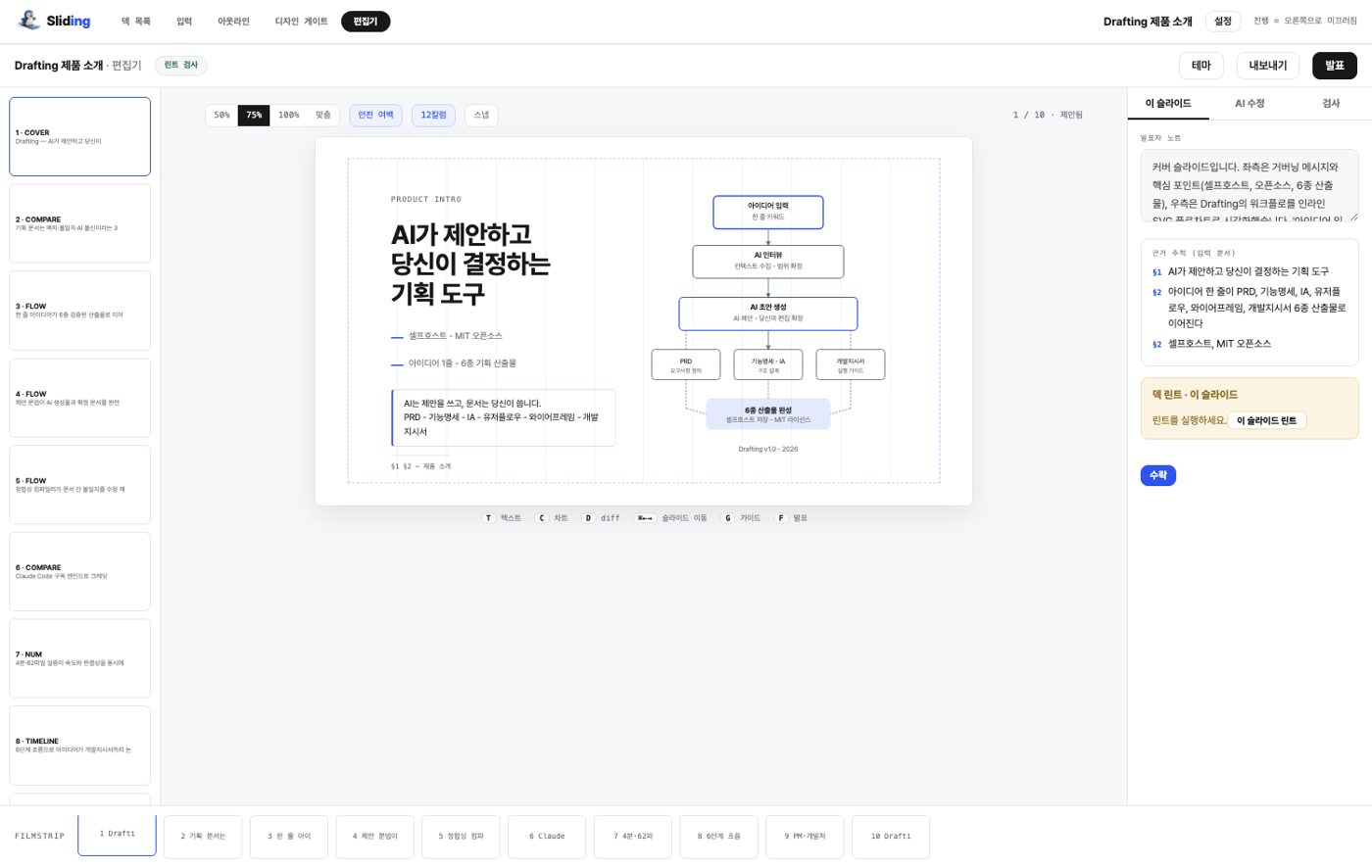
The point is a small shift in trust. The AI is good at proposing a layout and bad at knowing whether it actually fits. So we don't ask it to grade its own work. We measure.
On your machine, on your subscription
Sliding runs on your local Claude subscription, so there are no per-slide credits to burn, and the deck stays on your disk. Generate, scan, fix, repeat, all without sending your slides to anyone.